
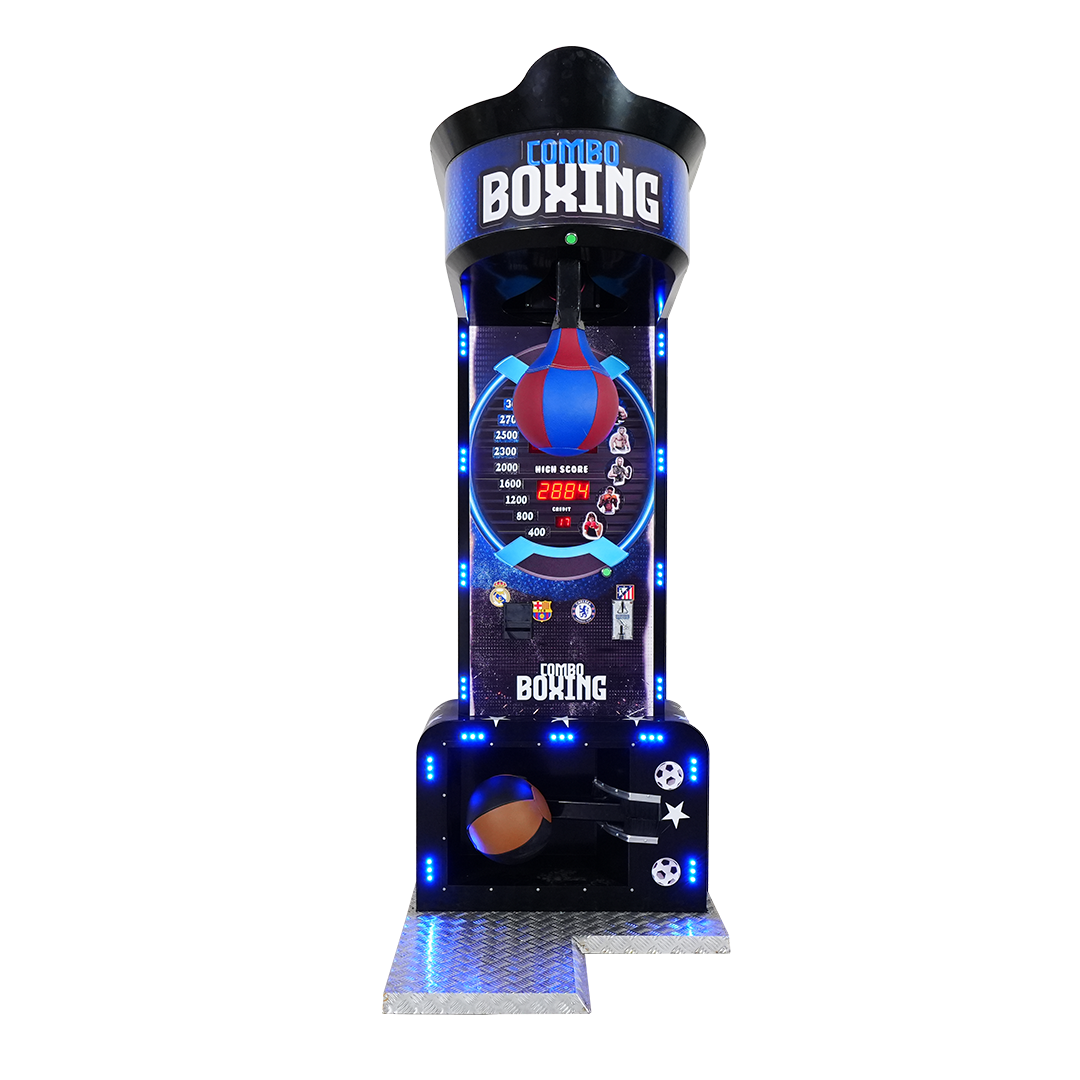


Are you considering investing in a boxing machine and wondering, “How much can I earn on boxing machines?” As modern entertainment trends continue to favor interactive, skill-based experiences, boxing machines have become a highly lucrative addition to venues such as arcades, bars, shopping malls, and recreational centers.
These machines don’t just offer guests a chance to test their strength; they also generate competitive excitement and repeat plays, making them a reliable income stream for business owners. As the demand for unique entertainment options grows, understanding the earning potential of boxing machines is more important than ever for maximizing profits and making informed business decisions.
This comprehensive guide explores all the essential aspects that impact boxing machine earnings. You’ll learn about the different types of boxing machines, the features and technology that drive player engagement, and the various factors—such as foot traffic, pricing strategies, and seasonal trends—that influence revenue. We’ll break down average daily, weekly, and monthly income projections for different venues, while also covering initial investment, ongoing costs, and payback periods. Whether you’re a venue owner or a new investor, discover actionable strategies and expert tips to help you earn smarter and get the most out of your boxing machine business.
Best Product Pugato Punching Machine Offer Now

What Is a Boxing Machine and How Does It Work?
Boxing machines represent arcade devices that measure punch force while delivering entertaining and competitive experiences for players. These interactive entertainment systems feature physical punching bags or targets that record scores and provide instant feedback through digital displays. The machines appeal to various audiences, from casual players seeking fun to competitive enthusiasts testing their strength and skill.
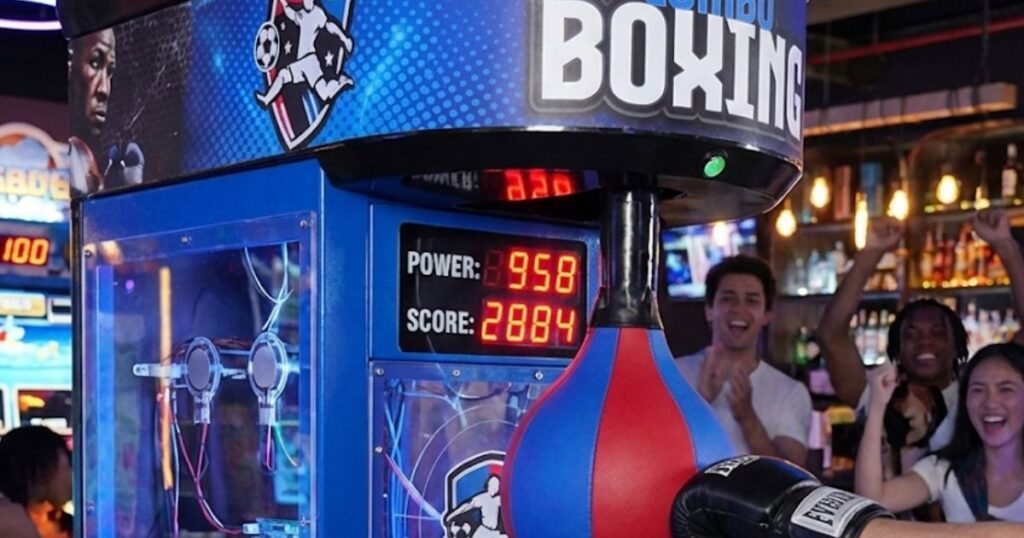
Most boxing machines operate through coin or card payment systems, making them popular fixtures in arcades, bars, and entertainment centers. Advanced sensors and scoring systems have enhanced the gameplay experience, leading to increased repeat plays and improved machine profitability. Understanding how much you can earn on boxing machines starts with recognizing their broad appeal and engaging mechanics.
Types of Boxing Machines: Punching Bags vs Speed Bags
Punching bag machines focus on measuring maximum force, attracting players who want to test their raw strength against challenging targets. These models tend to produce higher single-play scores, creating dramatic moments that draw spectators and encourage multiple attempts.
Speed bag machines emphasize rapid, repetitive strikes, catering to players focused on hand speed and rhythm development. These variants encourage skill-based, competitive play where technique matters more than brute force. Both machine types include adjustable difficulty settings and attract various age groups, maximizing overall usage rates.
Choosing between punching bag and speed bag models depends on venue demographics and player preferences. Venues with younger, strength-focused crowds may prefer punching bag machines, while locations emphasizing skill development might benefit more from speed bag variants.
Technology Behind Boxing Machine Scoring Systems
Modern boxing machines utilize sophisticated pressure sensors and accelerometers to record the intensity and speed of each punch accurately. Advanced scoring algorithms convert sensor data into numerical scores, which appear instantly on user displays.
Contemporary machines feature LED scoreboards, mobile connectivity options, and user profiles for enhanced player engagement. Some models allow players to track progress over time, creating loyalty and encouraging return visits. Accurate scoring systems reduce disputes and boost repeat plays, directly impacting revenue potential and player satisfaction levels.
Regular calibration and maintenance of sensors ensure score reliability and optimize machine performance. Proper technical upkeep maintains player trust and prevents revenue loss from malfunctioning equipment.
Key Features That Attract Players
Real-time feedback and visible high scores stimulate competition among players, encouraging multiple rounds per session. Eye-catching lights and dynamic sound effects enhance the arcade atmosphere, drawing attention and increasing foot traffic to the machine area.
Customization options, including difficulty settings and themed designs, help match player skill levels and preferences. Leaderboard tracking and prize incentives build player loyalty while fostering social interaction around the machine. These features transform individual play sessions into community experiences.
Durable construction ensures player safety and consistent gameplay, making machines suitable for high-traffic locations. Robust build quality reduces maintenance costs and maintains steady revenue streams over extended periods.
Boxing Machine vs Traditional Arcade Games
Boxing machines offer physical engagement that contrasts sharply with screen-based arcade games relying primarily on hand-eye coordination. The interactive, skill-based nature often results in higher repeat play rates per visitor compared to traditional video games.
Boxing machines require less floor space than multi-player video arcades, enabling flexible deployment across various venue types. Earnings per machine can surpass many classic arcade cabinets due to their broad appeal and competitive features that encourage extended play sessions.
Regular updates and creative maintenance keep boxing machines relevant in competitive entertainment environments. Their physical interaction element provides unique experiences that newer arcade innovations struggle to replicate, ensuring sustained player interest and revenue generation potential.
Factors That Influence Boxing Machine Earnings
Understanding how much you can earn on boxing machines requires analyzing multiple interconnected factors that directly impact revenue generation. Boxing machine earnings depend heavily on strategic placement, pricing decisions, equipment quality, and market conditions that vary significantly across different venues and time periods.
Foot Traffic and Customer Demographics
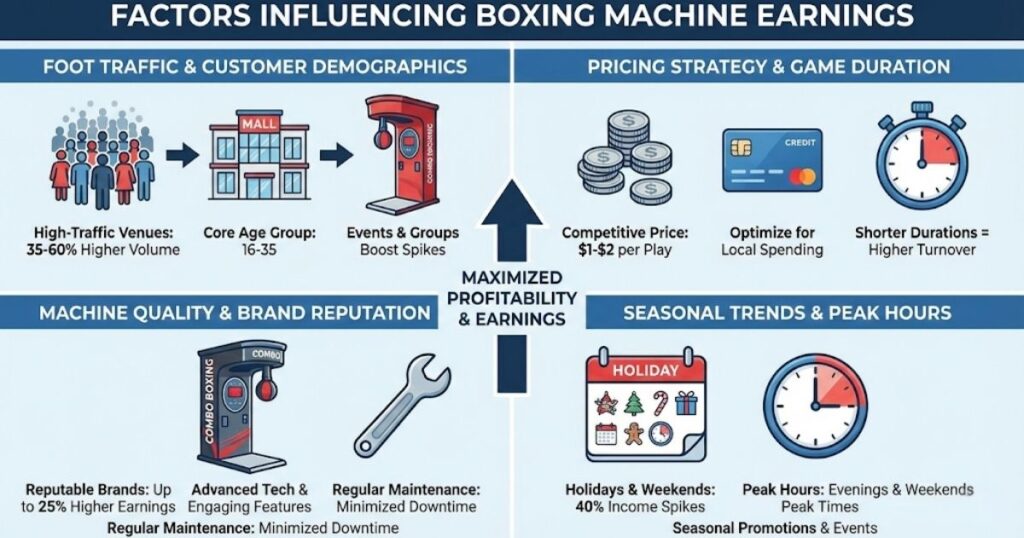
Location selection represents the most significant factor determining boxing machine profitability. High-traffic venues such as shopping malls and entertainment centers consistently generate 35-60% higher play volume compared to quieter locations. The demographic composition of visitors plays an equally important role, with age groups between 16-35 showing the greatest engagement levels and spending frequency.
Understanding local income levels enables operators to optimize pricing strategies for maximum participation rates. Events and group activities create substantial revenue spikes, particularly in venues that attract families and young adults. Analyzing visitor data helps identify peak usage times, allowing operators to adjust machine visibility and positioning for maximum impact on earnings potential.
Pricing Strategy and Game Duration
Competitive pricing structures between $1-$2 per play often maximize volume while maintaining healthy profit margins. Strategic pricing aligned with local spending patterns and competition rates can increase revenue by up to 18% compared to arbitrary pricing models. Package deals and off-peak discounts help maximize machine utilization during slower periods.
Game duration significantly affects turnover rates and customer satisfaction. Shorter game durations work better in high-foot-traffic locations by reducing wait times and boosting player turnover. Regular testing of different pricing models and monitoring play frequency data helps operators optimize returns and adjust strategies based on performance metrics.
Machine Quality and Brand Reputation
Equipment quality directly correlates with earning potential, as machines from reputable brands with advanced technology achieve 25% higher earnings due to superior reliability and user experience. Players consistently choose machines with engaging features, responsive displays, and visually appealing designs over basic alternatives.
Regular maintenance and prompt repairs minimize downtime, ensuring consistent income streams. Statistics demonstrate that branded machines generate up to $500 more monthly than generic alternatives in comparable locations. Showcasing new features or brand updates increases customer interest and perceived value, driving higher play rates.
Seasonal Trends and Peak Hours
Revenue patterns fluctuate significantly based on seasonal factors and timing. Holidays, weekends, and local events can create 40% income spikes over baseline months, making timing strategies essential for maximizing earnings. Peak hours typically occur during evenings and weekends, requiring operators to optimize machine availability and staffing accordingly.
Seasonal promotions such as tournament modes or prize incentives encourage participation during traditionally slower periods. Historical data analysis helps anticipate seasonal fluctuations and plan revenue strategies. Partnering with venue owners for holiday events leverages increased customer influx for higher earnings potential.
Competition from Other Entertainment Options
The presence of competing arcade machines, games, or activities significantly impacts boxing machine usage and per-play earnings. Operators report up to 30% drops in earnings when direct competitors introduce similar machines in identical locations, highlighting the importance of competitive positioning.
Unique features, exclusive branding, or prize incentives help differentiate machines and attract customers despite nearby competition. Regular software updates and visual refreshes keep machines appealing compared to newer alternatives. Analyzing competitor offerings identifies market gaps and enables development of targeted marketing approaches that maintain competitive advantages.
Optimal Locations for Installing Boxing Machines
Location selection plays a decisive role in determining how much you can earn on boxing machines. The right placement can mean the difference between modest returns and substantial profits. Successful operators focus on venues with consistent foot traffic, engaged audiences, and environments that naturally encourage interactive entertainment.
Analyzing demographic trends and monitoring customer behavior patterns helps ensure your boxing machine investment aligns with target audience preferences. Industry data consistently shows that strategic placement in high-traffic areas can increase monthly earnings by up to 30% compared to less optimal locations.
High-Traffic Entertainment Venues
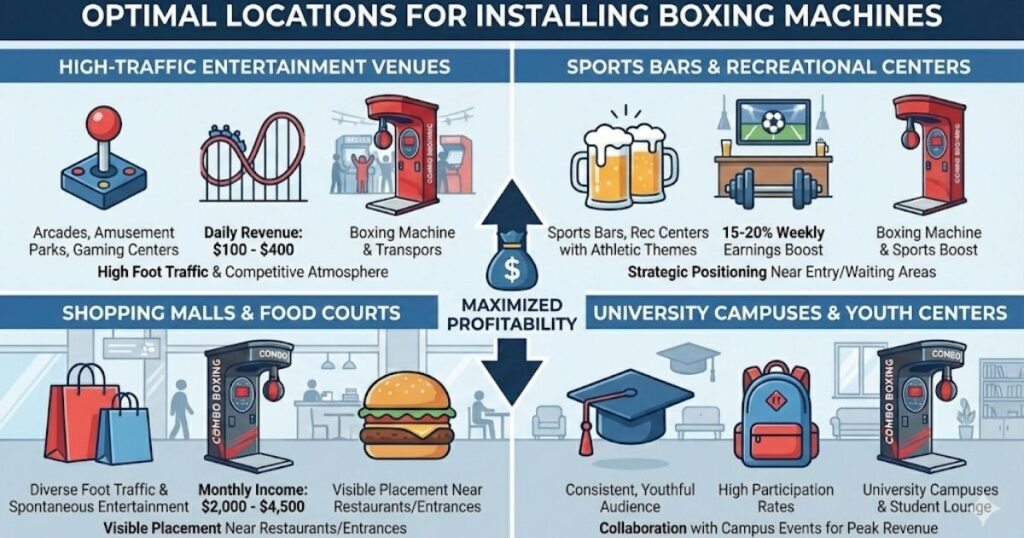
Arcades, amusement parks, and gaming centers represent prime locations for boxing machine installations. These venues consistently attract visitors seeking quick, engaging entertainment experiences. The competitive atmosphere and existing gaming infrastructure create an ideal environment for boxing machines to thrive.
Revenue potential in these locations ranges from $100 to $400 daily, depending on foot traffic patterns and scheduled events. Special occasions and holidays often drive significant revenue spikes, making temporary repositioning during peak periods a profitable strategy.
Pairing boxing machines with other skill-based games creates cross-play opportunities that boost total venue income. Statistical analysis from industry reports demonstrates that machines placed in entertainment venues consistently yield higher monthly returns compared to other location types.
Sports Bars and Recreational Centers
Sports bars provide the perfect competitive, social atmosphere that encourages boxing machine engagement. The natural connection between sports entertainment and physical challenges makes these venues particularly attractive for boxing machine placement.
Strategic positioning near entryways or waiting areas maximizes impulse plays and increases overall revenue generation. Recreational centers with athletic themes encourage repeat visits, creating valuable customer retention opportunities that translate into consistent earnings.
Partnership opportunities with venue owners for promotional nights can maximize player turnout and machine visibility. Venues that host tournaments or maintain leaderboard challenges typically realize a 15-20% boost in weekly earnings compared to standard operations.
Shopping Malls and Food Courts
Shopping malls offer diverse foot traffic that spans multiple demographics, from families to young adults, significantly expanding potential player bases. The casual environment encourages spontaneous entertainment choices, making boxing machines an attractive option for shoppers.
Food courts create ideal placement opportunities where customers naturally seek entertainment while dining or taking breaks. Positioning machines near popular restaurants or main mall entrances ensures maximum visibility and accessibility for potential players.
Industry experts report average monthly incomes ranging from $2,000 to $4,500 for machines in busy mall locations. Leveraging mall promotions and seasonal sales periods can drive higher earnings while enhancing brand exposure throughout the shopping center.
University Campuses and Youth Centers
University campuses provide access to a consistent, youthful audience with high participation rates in interactive entertainment. The competitive nature of student environments naturally aligns with boxing machine appeal, creating strong engagement opportunities.
Youth centers attract groups seeking competitive fun, which increases play frequency and drives ticket sales higher. Collaboration with campus event organizers can lead to peak attendance periods and greater revenue turnover during special events.
Placement in student unions or near popular gathering spots maximizes daily engagement rates. Revenue studies indicate that university placements can rival entertainment venue earnings during active academic periods, making them valuable long-term investment locations.
Detailed Revenue Analysis: Daily, Weekly, and Monthly Income Potential
Understanding how much you can earn on boxing machines requires analyzing revenue patterns across different timeframes. A data-driven approach reveals that earnings vary significantly based on location, seasonal trends, and local competition. Industry benchmarks indicate daily revenues can range from $30 to $250, while monthly projections help investors evaluate both immediate returns and long-term sustainability.
Revenue analysis shows strong seasonal and event-driven patterns that influence income potential. Weekend periods, holidays, and local events create substantial earning spikes that can dramatically impact monthly totals. Installation settings play a major role in determining profitability, with foot traffic and target audience preferences directly affecting daily play counts.
Average Daily Earnings by Location Type
Boxing machines generate varying daily income depending on their placement within different venue types. Busy arcades and entertainment centers typically produce between $50 and $200 daily according to current industry data. These venues benefit from dedicated gaming audiences who actively seek interactive entertainment experiences.
Bar and club environments present unique earning opportunities with daily revenues ranging from $30 to $150. Peak evening hours contribute the majority of income in these settings, as patrons engage with boxing machines during social gatherings. Shopping malls offer consistent foot traffic that translates to average daily earnings of $60-$180, with centrally located machines performing better than those in peripheral areas.
Seasonal tourism destinations and special events can substantially boost daily income beyond typical ranges. During high-demand periods, some locations report daily earnings exceeding $250. Market research specific to each potential location proves essential for optimizing daily earning potential before making installation decisions.
Weekly Revenue Patterns and Peak Days
Weekly earnings follow predictable patterns that savvy operators can leverage for maximum profitability. Most locations report that Fridays, Saturdays, and special event nights account for more than 40% of total weekly revenue. Understanding these peak periods allows owners to adjust pricing strategies and promotional activities accordingly.
Typical weekly revenue spans from $350 to $1,400, with significant fluctuations based on local demographics and competitive landscape. Strategic marketing promotions, including discount play rates and organized tournaments, can increase off-peak weekly income by up to 20%. These initiatives help balance revenue distribution across slower weekdays.
Data analysis demonstrates that loyalty programs and consistent social media engagement drive repeat customers during peak revenue days. Monitoring local events, holidays, and school vacation periods enables operators to maximize weekly earnings through targeted promotional campaigns and adjusted operating hours.
Monthly Income Projections and Growth Trends
Consistent-performing locations generate monthly revenues between $1,500 and $6,000 based on recent case studies from 2024. First-year income typically shows 10-25% month-on-month growth as brand recognition increases and operational processes become optimized. This growth trajectory reflects the learning curve associated with understanding local customer preferences.
Tracking customer behavior patterns and seasonal demand cycles allows owners to forecast revenue growth and proactively address potential income dips. Multi-machine deployments in high-traffic venues or established franchise operations tend to produce steadily rising monthly income figures over time.
Monthly revenue audits help identify emerging trends, establish realistic performance targets, and maintain long-term profitability. These regular assessments enable operators to make informed decisions about expansion opportunities and operational adjustments.
Revenue Per Play Calculations
Average play pricing varies from $1 to $5 depending on regional markets and venue types, with most successful locations settling between $2 and $3 per play. Industry insights reveal daily play counts ranging from 20 to over 100, creating robust per-play earning potential when properly managed.
Promotional pricing strategies and bulk play discounts can improve usage rates while maintaining healthy overall revenue per play. Upselling opportunities through leaderboards, prize systems, and branded events increase average spending per play by up to 30%. These additional features create more engaging experiences that encourage repeat visits.
Adjusting play pricing according to local spending patterns, competitive rates, and machine features helps optimize per-play revenue. Regular analysis of pricing effectiveness ensures operators maintain competitive positioning while maximizing earning potential from each customer interaction.
Initial Investment, Ongoing Costs, and Payback Period
Understanding the complete financial picture of boxing machine ownership is essential for making informed investment decisions. When considering how much you can earn on boxing machines, accurate cost breakdowns and payback analysis help determine profitability potential and guide effective financial planning. Analyzing these factors allows investors to project realistic return timelines while assessing business risks appropriately.
Boxing Machine Purchase Costs and Financing Options
Boxing machines represent a significant upfront investment, with prices ranging from $2,500 to $7,500 depending on brand reputation, advanced features, and regional market conditions. Many manufacturers recognize the financial barriers and offer flexible lease-to-own programs or attractive bulk purchase discounts that help reduce immediate capital requirements.
Financing options provide valuable alternatives for entrepreneurs looking to minimize upfront costs. Bank loans, equipment leasing arrangements, and vendor credit programs can significantly improve cash flow management during the initial business phase. Additionally, new business owners may qualify for tax incentives or grants specifically designed for entertainment equipment investments.
Industry experts recommend requesting detailed quotes and comprehensive warranty terms from multiple vendors. This approach ensures you secure the best value while protecting your investment through reliable service agreements.
Installation and Setup Expenses
Beyond the machine purchase price, installation and setup expenses typically add $300 to $1,000 to your total investment. These costs cover essential services including site preparation, power supply adjustments, and shipping logistics to your chosen location.
Professional setup services provide significant value by ensuring compliance with safety regulations and avoiding potential technical issues. Proper installation directly impacts user safety and extends machine lifespan, ultimately protecting your revenue stream. Additional expenses may include custom signage, floor protection materials, and initial branding elements for effective location-based marketing.
Scheduling installation during off-peak business hours helps avoid lost revenue opportunities while minimizing operational disruption. Research demonstrates that thorough professional setup reduces future maintenance issues and improves early revenue performance significantly.
Maintenance, Repairs, and Insurance Costs
Ongoing operational costs require careful budgeting to maintain profitability. Routine maintenance expenses typically range from $30 to $100 per month, ensuring machine longevity and consistent earning potential. Regular maintenance prevents costly breakdowns and maintains the engaging user experience that drives repeat customers.
Repair costs for common components such as gloves, sensors, and control panels average $150 to $500 annually, varying based on usage intensity and location conditions. Heavy-traffic venues naturally experience higher wear rates, requiring more frequent component replacements.
Insurance coverage protects against damage, theft, and liability concerns, with annual premiums starting at $200 to $500. Requirements vary by location and local regulations, making consultation with insurance professionals advisable. Maintaining detailed maintenance logs supports warranty claims and demonstrates responsible equipment management.
Statistics reveal that machines receiving proactive maintenance generate approximately 18% higher annual revenue compared to those with reactive maintenance approaches.
ROI Timeline and Break-Even Analysis
Understanding payback periods helps investors set realistic expectations for boxing machine profitability. Typical payback periods range from 6 to 14 months, depending primarily on location foot traffic and strategic placement decisions.
Daily income potential averages between $30 and $120, allowing owners to forecast monthly and annual earnings while factoring in all operational expenses. Return on investment accelerates in high-volume entertainment venues, with seasonal marketing campaigns and local events providing additional revenue boosts.
Break-even calculations involve subtracting all costs from projected revenue streams. Many successful owners exceed initial earnings projections through effective promotional strategies and optimal machine placement. Advanced tracking tools and digital payment systems provide valuable performance data, helping business owners analyze results and optimize their return on investment continuously.
High-traffic locations with engaged demographics typically achieve faster payback periods, making location selection a critical factor in determining how much you can earn on boxing machines.


