
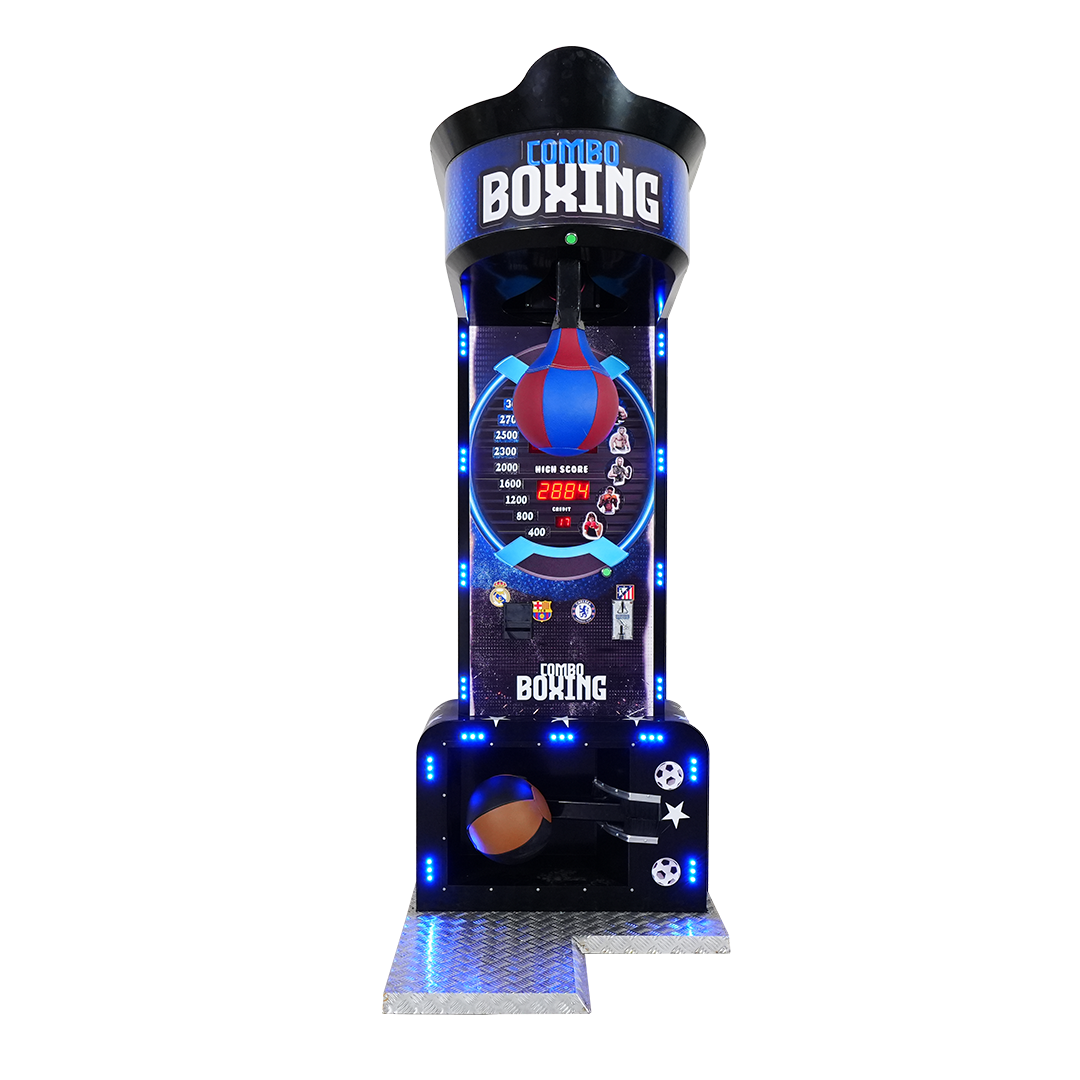


If you’ve ever asked yourself “How to Beat the Boxer Punch Machine?” and wanted more than generic tips, this comprehensive guide is for you. Here, you’ll learn the exact mechanics, timing, and technique refinements that drive record-breaking scores specifically on Pugato boxer machines. You’ll discover how stance, distance, kinetic chain, targeting, and breath control work together to produce a clean, centralized impact that converts to higher numbers. Throughout, we’ll focus only on Pugato equipment and how to get the most out of it, from warm-up to real record attempts.
Pugato boxer machines reward clean mechanics and consistent contact. That means absolute power matters, but only when it’s delivered with precise alignment, a crisp acceleration window, and a short, efficient contact time. In simple terms: velocity plus structure, channeled into the center of the target, with the body synchronized from the ground up. Master that, and your scores climb fast.
Best Product Pugato Punching Machine Offer Now

How Pugato Boxer Machines Score Power
On Pugato machines, the reading you see is a response to the impulse your punch delivers—effectively the combination of speed, effective mass, and how efficiently that energy transfers on contact. The better your mechanics, the less energy you “leak” into the air or through an unstable wrist, and the more you put into the target.
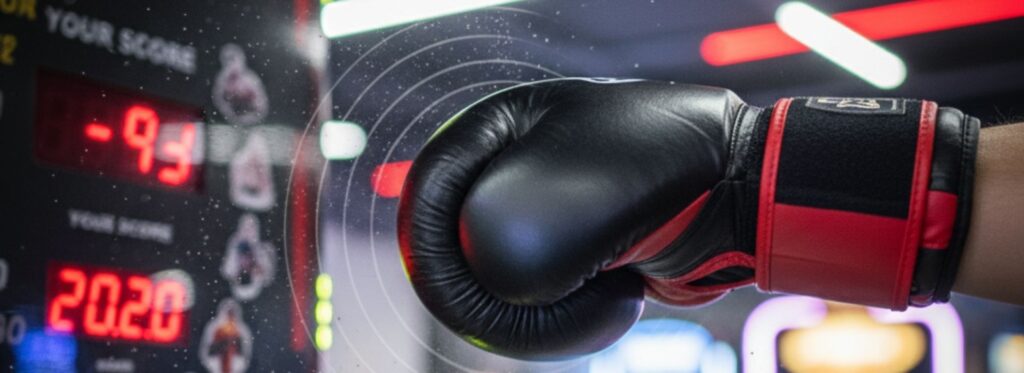
- The punch that wins isn’t just “hard.” It’s the one that arrives fast, in one connected piece, with the fist perfectly aligned to the target’s center.
- Contact quality matters as much as force. A short, sharp, and well-aligned impact outperforms a long “push” or a slappy, misaligned swing.
- Calibration and feel are designed to reward the fundamentals. If you hit the center cleanly—especially with the larger knuckles of the index and middle fingers—Pugato’s target face returns consistent, repeatable feedback.
In short, think “clean transfer” rather than “just hit harder.” When you stop wasting energy in poor angles and late tension, your score jumps.
The Foundation: Stance and Distance
Before you throw a single heavy shot, set your body to generate speed along a straight, efficient path. That starts with stance and distance.
Stand in a comfortable fighting stance where your lead foot points toward the target and your rear foot is turned slightly outward to allow your hip to travel. Keep your feet just beyond shoulder-width so you can load and unload without wobble. You’re not bracing for a wrestling match; you’re preparing to sprint for a fraction of a second. The feeling should be athletic, springy, and balanced.
Distance defines how much space your punch has to accelerate. Too close and the strike is cramped; too far and you end up reaching, losing structure. You want to be close enough that your rear-hand punch can drive almost to full extension without locking out. When your fist meets the target, you should have a tiny margin left—enough for a tight follow-through, not a shove.
A strong stance gives you a foundation to rotate; a correct distance lets you reach top speed at the exact moment of contact. Get these right and you’ll feel your punch “snap” rather than “push.”
The Kinetic Chain: From Floor to Fist
High scores are built from the ground up. The kinetic chain begins at the floor as you make a subtle drive through the rear foot. That drive turns your hips. Your torso follows a split second later, delivering momentum into the shoulder, through the elbow, and finally to the fist. When all links fire in sequence, force stacks rather than dissipating.
The most common error is trying to “arm” the punch. If your arm works alone, you cap your speed and collapse the structure that transmits force. Instead, let the body start the motion and let the arm whip through. Keep the upper body relaxed until the last instant, then deliver a sharp, brief contraction at impact.
Keep your wrist neutral and aligned with your forearm. Aim to land with the first two knuckles so the bones line up behind the strike. That alignment allows you to transfer force without bending the wrist or bleeding power into soft tissue. You’ll feel the difference immediately: the punch lands denser, crisper, and the machine rewards it.
Targeting the Center and Controlling Contact Time
Accuracy is a multiplier. Pugato machines respond best to strikes that hit the center of the target face. If you clip the edge or come in at a glancing angle, the score drops—even if the punch felt “big.” Your goal is a compact, square impact, delivered into the middle of the pad with the knuckles flush.

Equally crucial is contact time. A great punch isn’t a shove; it’s a brief, powerful collision. If your hand lingers or slides, you lose velocity and the sensor reads less. Instead, think “through, not on.” You’re aiming slightly past the center so the fist doesn’t stall on the surface. That subtle projection creates a short follow-through while keeping the strike explosive.
For many athletes, the sweet spot appears when they keep the shoulder free until the final inches, then “close” it into the shot while the hips finish turning. The result is a single, dense beat—exactly what the machine converts into a big number.
Timing, Rhythm, and the Role of Breath
Even with good mechanics, poor timing can flatten your score. Build a simple rhythm: settle your stance, let your shoulders loosen, lock your eyes on the center, then explode. Don’t creep into the punch. Relax, then sprint.
Breath helps trigger that sprint. Inhale as you set, then exhale sharply on impact—think a short hiss like “tsst.” That burst of air braces your core without making you rigid. Over-tensioned shoulders and neck slow the hand; a relaxed wind-up with a crisp, audible exhale makes it faster.
On record attempts, avoid fatigue-driven repetition. One or two elite efforts, separated by rest, typically beat five or six medium ones. When you feel the rhythm snap into place, commit.
Which Punch Type Scores Highest?
For most athletes, the rear-hand straight (often called the cross) delivers the best returns on Pugato machines. It maximizes hip and torso rotation while keeping the line to the target simple and direct. Some lifters and throwers find a compact, 30–45° short cross or hybrid hook feels even stronger, because it fits their natural rotation. What rarely wins is a wide, looping shot—those tend to slap or glance, lengthen contact time, and tank your score.
Below is a quick comparison to help you choose the shot that fits your body and still lands cleanly on center.
| Punch Type | Primary Power Source | Best Use Case on Pugato | Main Risk | Coaching Cue |
|---|---|---|---|---|
| Rear-hand straight (cross) | Hip and torso rotation along a straight line | Highest, most repeatable peak scores for most athletes | Overextending/reaching | “Drive the floor, snap the hip, spear the center.” |
| Short cross / compact hook (30–45°) | Rotational whip with minimal arc | Great for athletes with powerful rotation and shorter arms | Slapping if too wide | “Compact arc, knuckles square, cut through the center.” |
| Wide hook | Momentum from a big swing | Rarely optimal; fun but inconsistent | Glancing contact, long time on target | “Tighten it or switch to short cross.” |
| Overhand-style hit | Downward rotation and shoulder drop | Occasionally works for tall athletes | Wrist angle strain, misalignment | “Only if you can keep wrist neutral; otherwise avoid.” |
Bold takeaway: The simpler the line and the squarer the contact, the bigger the score—especially on Pugato machines.
Warm-Up and Safety that Boost, Not Drain, Your Power
You don’t need a long warm-up, but you do need a targeted one. Mobilize the shoulders, rotate the torso, loosen the hips and wrists, and do a few light “ghost” punches to prime coordination. The goal is to switch your system on without accumulating fatigue.
If you plan to hit near your max, protect the small structures in the hand and wrist. Light wraps or training gloves can improve confidence and help keep the wrist aligned. Above all, maintain a neutral wrist from start to finish; collapsing the hand is the fastest way to lose points and comfort.
Build up to peak. Two or three moderate strikes to groove distance and aim, one or two strong rehearsals, then your best punch. If anything feels off numbness, sharp discomfort stop and reset.
Common Mistakes and Exactly How to Fix Them
| Mistake | What It Looks Like | Why It Kills Score | Fix in One Cue |
|---|---|---|---|
| Arm-only punching | The shoulder and elbow do all the work; hips stay dead | Low speed, poor transfer | “Turn the hip first, let the arm whip.” |
| Standing too close | Punch is cramped; can’t accelerate | No runway for speed | “Half-step back so the elbow nearly straightens at impact.” |
| Reaching too far | Shoulder rolls forward; elbow locks | Lost structure, weak hit | “Bring your feet with you—reclaim the stance.” |
| Slappy hook | Big arc, knuckles glance sideways | Long contact, low reading | “Tighten the arc; land the first two knuckles square.” |
| Bending the wrist | Fist collapses on impact | Energy leaks, discomfort | “Knuckles–wrist–forearm in one straight line.” |
| Early tension | Neck and traps clenched pre-throw | Slower hand speed | “Loosen, then snap—exhale on contact.” |
Notice how each solution centers on alignment, timing, or relaxation. Clean mechanics are a force multiplier.
Pugato Experience: Why the Details Pay Off Here
Because Pugato boxer machines are designed for consistent feedback and a clear center target feel, the technique you refine is the technique the machine rewards repeatedly. That means the hours you put into stance, distance, rotation and contact quality aren’t lost to inconsistency. You’ll feel the target, trust your cues, and build confidence attempt after attempt.
When you’re ready to put these principles into practice or explore models that fit your venue, check the lineup here: Pugato Products.
FAQs: Your Most Pressing Questions, Answered
Q: What single change produces the fastest score increase on Pugato machines?
A: Hit the center with a neutral wrist and a short contact time. Most people gain immediately by fixing alignment and avoiding a shove.
Q: Should I rotate the fist midair or keep it fixed?
A: Rotate only as much as you can while keeping the wrist neutral. Structure beats flair. If rotating causes the wrist to bend, keep it simpler.
Q: How many attempts should I make in a session?
A: Fewer, better attempts win. One or two max-effort strikes separated by rest usually outperform a long series. Keep your nervous system fresh.
Q: Do I need hand wraps or gloves?
A: They’re not mandatory but can improve confidence and help maintain wrist alignment, especially during peak efforts.
Q: What if I’m short on time?
A: Run the 5–7 minute routine: brief mobility, a couple of medium strikes, a couple of strong ones, then one clean max. It’s efficient and effective.
Q: Which punch is best for smaller athletes?
A: Rear-hand straight remains the most reliable because it’s direct and uses rotation well. Compact short cross can also score big when kept tight.
Contact Us Pugato
Have questions or need a quick quote? Get in touch:
- Email: info@pugato.com
- Phone (TR): +90 532 256 16 85
- Phone (RU): +7 918 033-97-47
- Location: Open in Google Maps


